Why Korean Dermatologists Rarely Recommend Just One Treatment in Seoul
Introduction
If you visit a dermatology clinic in Seoul expecting to be told that one treatment will solve every skin concern, you may encounter a different approach. Korean dermatologists often look beyond a single visible problem and evaluate the overall condition of the skin, including hydration, pigmentation, texture, elasticity, redness, pore appearance, and signs of aging.
This is one reason combination and personalized treatment plans are so common in South Korean cosmetic dermatology. Rather than automatically performing several procedures, a dermatologist may recommend a carefully selected combination designed to address different aspects of skin health. The goal is usually not to make the skin look dramatically different overnight, but to improve its overall quality while maintaining a natural appearance.
Why Korean Dermatologists Often Look Beyond One Skin Concern
Skin concerns rarely exist independently. A person may visit a clinic because of enlarged pores but also have dehydration, uneven pigmentation, mild acne scarring, or early loss of elasticity.
Treating only the most noticeable issue may produce an incomplete result.
For example, improving skin texture may not fully address pigmentation. Reducing pigmentation may not improve dehydration or laxity. Adding hydration may make the skin look healthier but may not significantly improve deeper textural irregularities.
This is why Korean dermatology commonly takes a broader view of the skin.
The skin is treated as an interconnected system
Dermatologists may consider several factors during consultation:
- Skin hydration
- Sebum production
- Pigmentation
- Skin texture
- Pore visibility
- Acne and acne marks
- Redness
- Elasticity
- Fine lines
- Overall skin thickness and condition
- Previous cosmetic treatments
- Lifestyle and sun exposure
The treatment plan can then be adjusted according to the patient's priorities rather than relying on one standard procedure.
What Does a Combination Treatment Approach Mean?
A combination approach does not necessarily mean having multiple procedures during one appointment.
It can mean combining different treatments during the same treatment plan, with procedures performed at appropriate intervals.
For example, a dermatologist may recommend one treatment for pigmentation and another for hydration or collagen support. Depending on the patient's skin condition, these may be performed together, several weeks apart, or alternated over a longer maintenance schedule.
The exact combination should depend on the individual rather than on a fixed package.
Combination does not mean more treatment is always better
An important distinction is that Korean dermatology is not simply about adding more procedures.
A good treatment plan should have a reason for every recommended treatment.
If a patient has mild concerns, a dermatologist may recommend a very conservative plan. Another patient with several overlapping concerns may benefit from a more comprehensive strategy.
The objective should be appropriate treatment, not maximum treatment.
Why One Treatment May Not Address Multiple Skin Layers
Different aesthetic treatments work through different mechanisms.
Laser treatments, for example, may target pigmentation, vascular concerns, or certain aspects of skin texture depending on the technology and settings. Energy-based tightening treatments may focus more on tissue remodeling and firmness. Injectable skin boosters can be used for specific hydration or skin-quality goals, while neuromodulators and fillers address different anatomical concerns.
Because these treatments have different purposes, one procedure may not reasonably address every concern.
Example: pigmentation and skin laxity
Imagine a patient who has sun-related pigmentation and early jawline laxity.
A pigmentation-focused treatment may help improve the appearance of uneven tone, but it is not necessarily designed to address laxity. Conversely, a tightening procedure may improve firmness but may not significantly reduce pigmentation.
A dermatologist may therefore separate these concerns and create a treatment sequence.
The Korean "Skin Quality First" Philosophy
One of the most recognizable ideas in modern Korean aesthetic dermatology is the emphasis on overall skin quality.
Instead of focusing exclusively on dramatic facial changes, many patients seek improvements in:
- Smoothness
- Hydration
- Clarity
- Radiance
- Elasticity
- Even skin tone
- Refined texture
- Natural-looking firmness
This approach fits well with the broader Korean beauty preference for skin that appears healthy and well maintained.
Why skin quality can matter more than dramatic correction
A face does not necessarily look youthful because every feature has been altered.
Healthy-looking skin can influence how the entire face is perceived. Improvements in hydration, texture, tone, and elasticity may create a fresher appearance without changing facial identity.
For patients who prefer subtle aesthetic improvements, this can be particularly appealing.
How Korean Dermatologists May Build a Multi-Treatment Plan
A personalized treatment plan usually starts with assessment rather than immediately selecting procedures.
Step 1: Identify the primary concerns
The dermatologist first determines what bothers the patient most.
This might include:
- Acne
- Acne scars
- Pigmentation
- Enlarged pores
- Fine lines
- Dullness
- Redness
- Dehydration
- Loss of firmness
Not every concern needs to be treated at once.
Step 2: Assess the underlying skin condition
The visible concern may not tell the whole story.
For instance, skin that looks dull may also be dehydrated. Pores may appear more prominent because of excess sebum or reduced elasticity. Fine lines may look deeper when the skin barrier is dry.
Understanding these factors helps the dermatologist choose an appropriate strategy.
Step 3: Establish priorities
A dermatologist may divide the plan into immediate priorities and longer-term goals.
For example:
Skin concernPossible treatment goalPigmentationImprove uneven skin toneDehydrationImprove moisture and skin comfortFine linesSupport smoother-looking skinLoss of elasticityImprove firmnessAcne scarsImprove textureRednessReduce visible vascular or inflammatory appearanceDullnessImprove overall radiance
The treatments listed in a plan will vary according to diagnosis, skin type, medical history, and individual suitability.
Step 4: Decide treatment timing
Some procedures may be suitable for combination treatment, while others may require spacing.
A dermatologist may therefore recommend a sequence rather than performing everything on one day.
This can be particularly important for international patients who have limited time in Korea.
Popular Treatment Categories That May Be Combined
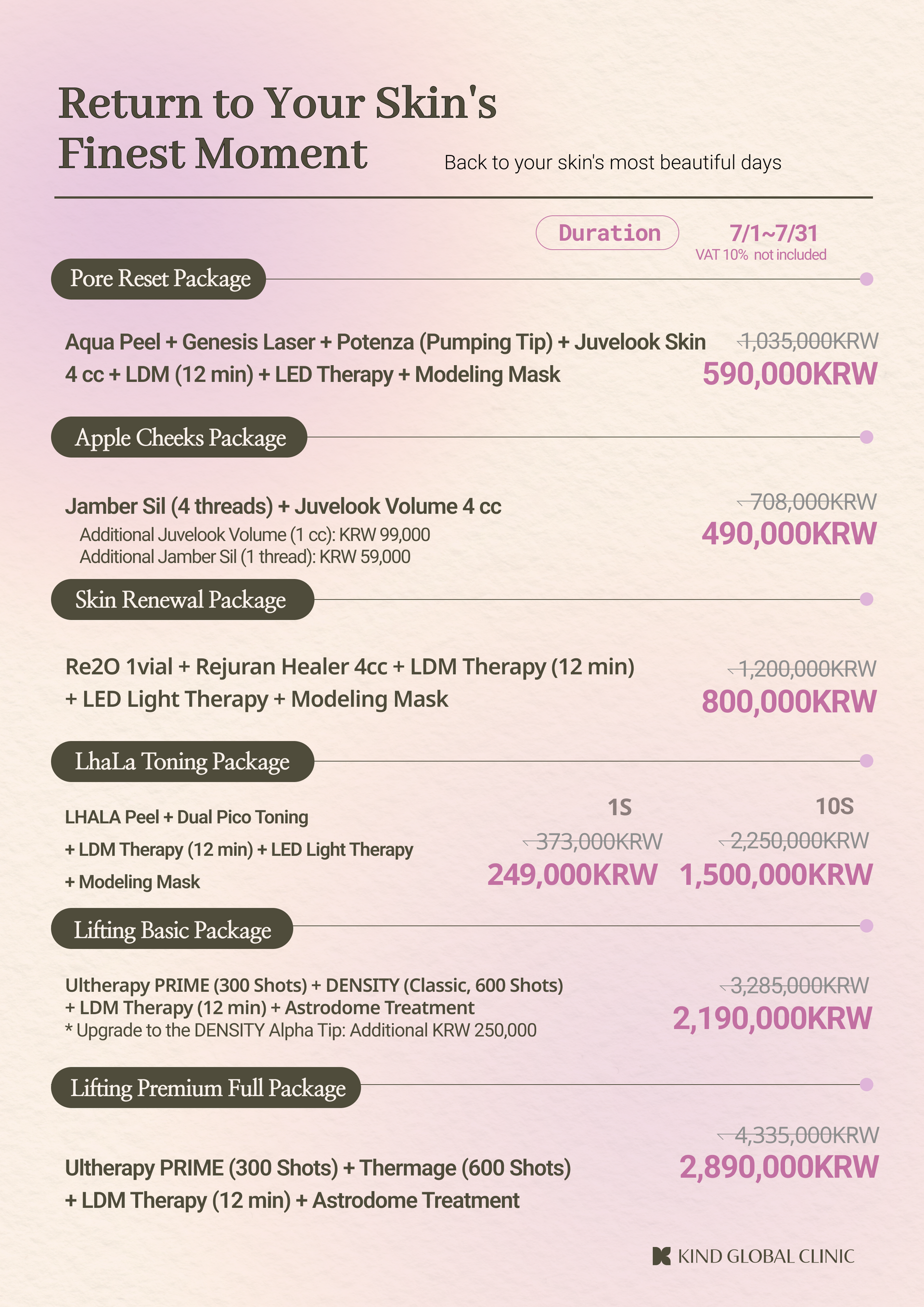
Korean dermatology clinics offer a wide range of aesthetic treatments, but the appropriate combination varies significantly between patients.
Laser and light-based treatments
Different laser and light technologies may be used for concerns such as pigmentation, redness, acne-related problems, or texture.
The specific device and settings should be selected based on the skin concern rather than simply choosing the newest technology.
Radiofrequency and ultrasound treatments
Energy-based treatments may be considered when the primary concern involves firmness, elasticity, or facial contour.
Some technologies are designed to deliver energy at specific depths to stimulate tissue responses. Suitability depends on factors such as skin thickness, age, facial anatomy, and the degree of laxity.
Injectable skin-quality treatments
Some injectable treatments are designed to support hydration, texture, or overall skin quality rather than create obvious facial volume.
These can be considered when a patient wants subtle improvement, although injection-based procedures still involve medical risks and should be performed by qualified professionals.
Chemical peels and exfoliation treatments
Peels can be useful for selected patients with concerns involving dullness, acne, superficial pigmentation, or texture.
They are not appropriate for everyone, and stronger treatments can increase the risk of irritation or pigmentation changes in susceptible skin.
Why Korean Dermatologists May Prefer Treatment Sequencing
Performing several procedures simultaneously is not always the best option.
Treatment sequencing allows the dermatologist to observe how the skin responds before introducing another procedure.
For example, a patient may first receive treatment aimed at improving active acne or inflammation. Once the skin becomes more stable, the focus may shift toward acne scars or pigmentation.
This approach can make the treatment plan more controlled.
Sequencing can also reduce unnecessary procedures
After the first stage of treatment, some concerns may improve enough that another procedure is no longer necessary.
This is one reason consultation and follow-up are important.
A responsible dermatologist should be willing to adjust the treatment plan instead of treating the original plan as fixed.
Why This Approach Appeals to International Patients
Medical tourists often arrive in Seoul with a long list of aesthetic concerns.
They may want brighter skin, smaller-looking pores, improved pigmentation, better texture, and a firmer appearance during the same trip.
However, trying to address everything immediately can create unnecessary risks.
A personalized plan can help international patients understand what is realistically achievable during their stay and what may require follow-up treatment after returning home.
Ask about treatment timing before booking
International patients should ask:
- How many treatments are actually recommended?
- Can the procedures be safely combined?
- Which treatment should come first?
- How much downtime is expected?
- Will the skin be more sensitive to sunlight afterward?
- How many days should be allowed between procedures?
- Is follow-up treatment likely to be necessary?
- What skincare should be avoided before and after treatment?
These questions are particularly important when the patient has only a few days in Seoul.
The Importance of Avoiding Over-Treatment
Combination treatment should never become an excuse for unnecessary procedures.
More procedures do not automatically produce better skin.
Over-treatment can contribute to irritation, prolonged redness, excessive dryness, pigmentation problems, or other complications depending on the procedure.
A treatment plan should therefore balance expected benefits with potential risks.
A conservative plan can still be effective
For someone with relatively healthy skin and mild concerns, the best plan may involve only one treatment followed by appropriate skincare and sun protection.
For another patient, several complementary treatments may be reasonable.
The difference is personalization.
How Skincare Fits Into a Multi-Treatment Strategy
Professional treatments are only one part of skin maintenance.
A dermatologist may also recommend a simple home routine based on the patient's skin condition.
Common components can include:
- Gentle cleansing
- Moisturization
- Broad-spectrum sunscreen
- Appropriate acne care
- Pigmentation-supporting products when suitable
- Barrier-supportive skincare
The routine should not necessarily become complicated.
In many cases, consistency matters more than having a large collection of products.
Sun protection is especially important
Patients receiving pigmentation or resurfacing treatments should take sun protection seriously.
UV exposure can contribute to pigmentation and premature skin aging, potentially reducing the long-term benefit of treatment.
For patients traveling around Seoul, daily sunscreen and sensible sun avoidance can be important parts of their treatment plan.
Why This Does Not Mean Every Korean Dermatology Visit Requires Multiple Procedures
It is important not to misunderstand the Korean combination-treatment philosophy.
Korean dermatologists do not universally recommend several procedures to every patient.
The treatment approach depends on:
- Age
- Skin condition
- Medical history
- Skin type
- Treatment goals
- Previous procedures
- Tolerance for downtime
- Budget
- Upcoming events
- Long-term maintenance goals
A younger patient with healthy skin may need very little intervention. A patient with multiple concerns may require a more structured program.
Choosing a Dermatology Clinic in Myeongdong
For international visitors, Myeongdong can be a convenient location for accessing cosmetic dermatology services while staying in central Seoul.
When comparing clinics, do not choose solely based on the number of treatments advertised.
Look for a clinic that provides:
- A proper medical consultation
- Clear explanations of treatment goals
- Appropriate treatment selection
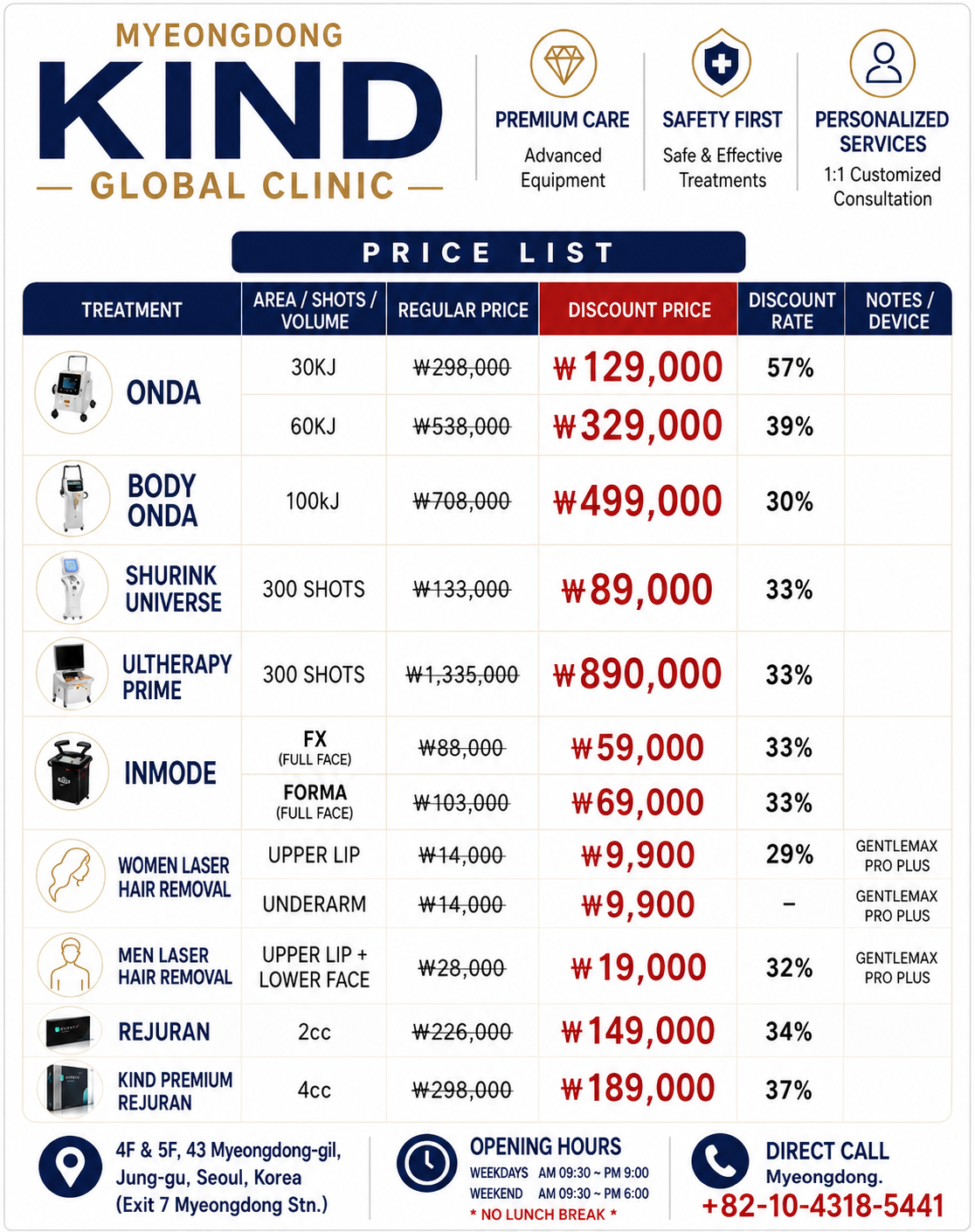
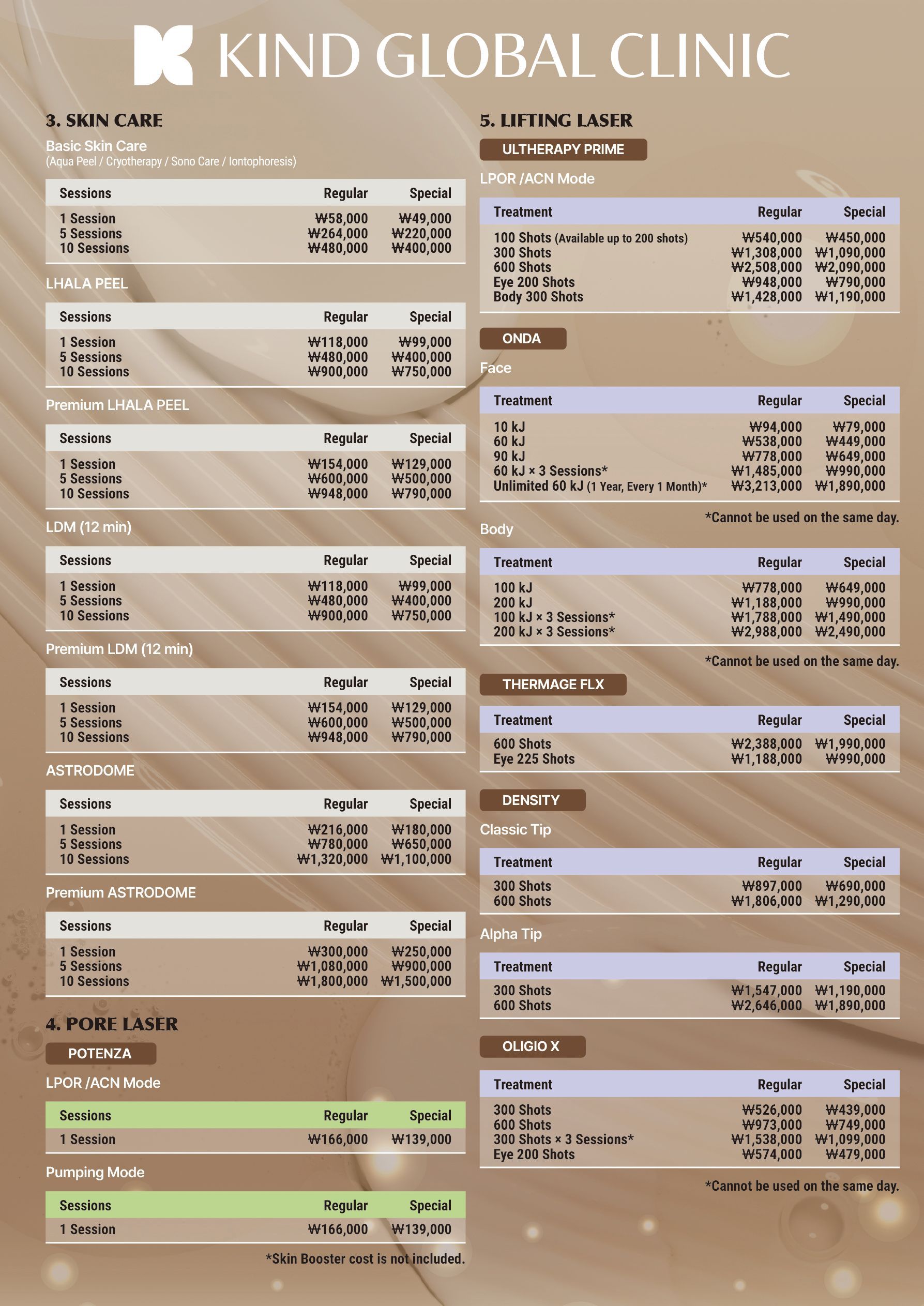
- Transparent pricing
- Realistic expectations
- Information about downtime
- English or other language support when needed
- Proper aftercare instructions
- A willingness to recommend fewer treatments when appropriate
The quality of the consultation can be just as important as the treatment menu.
What to Expect From a Personalized Korean Dermatology Consultation
A consultation should be a conversation rather than a sales presentation.
You should be able to explain what you want to improve and what you do not want to change.
If you prefer subtle results, tell the dermatologist.
If you have limited downtime, mention your travel schedule.
If you are concerned about pigmentation or sensitivity, make that clear before treatment.
Bring your treatment history
International patients can make consultations more productive by preparing information about previous:
- Laser treatments
- Injectables
- Chemical peels
- Acne treatments
- Skin reactions
- Cosmetic procedures
- Prescription medications
If you know the name of a previous treatment or device, bring that information with you.
What Makes the Korean Approach Different?
The biggest difference is not necessarily the number of treatments available.
South Korea has a highly developed aesthetic medicine industry with many technologies and treatment options, but the more useful concept is individualized treatment planning.
Rather than asking, "Which single treatment is best?" patients may benefit from asking, "Which combination or sequence is appropriate for my skin and goals?"
That shift in thinking can produce a more realistic treatment strategy.
The best plan may include multiple procedures, but it may also include periods of rest, skincare, monitoring, and no treatment at all.
Conclusion
Korean dermatologists rarely recommend just one treatment because many skin concerns overlap. Pigmentation, dehydration, texture, acne scars, redness, fine lines, and loss of elasticity can require different approaches, and a single procedure may not reasonably address all of them.
However, the Korean combination-treatment philosophy should not be interpreted as "more is better." The strongest treatment plans are individualized, medically appropriate, and built around realistic goals.
For patients visiting Seoul, including international travelers and medical tourists, the most valuable step is a professional consultation. A qualified dermatologist can determine which concerns should be treated first, which procedures can be combined, and which treatments may be unnecessary.
Ultimately, the goal is not to collect treatments. It is to develop a thoughtful skin strategy that supports healthier-looking, balanced, natural-looking skin over time.
FAQs
Why do Korean dermatologists recommend combination treatments?
Different skin concerns often require different treatment approaches. A dermatologist may combine or sequence treatments to address concerns such as pigmentation, texture, hydration, acne scars, and firmness.
Does combination treatment mean I need several procedures at once?
No. Combination treatment can involve procedures performed during the same appointment or treatments spaced over several weeks or months. The appropriate timing depends on the procedures and your skin condition.
Is more treatment always better for skin?
No. Over-treatment can increase the risk of irritation and other complications. A personalized plan should focus on the treatments that are medically and aesthetically appropriate for your goals.
What treatments are commonly combined in Korean dermatology?
Depending on the patient, dermatologists may combine or sequence laser treatments, energy-based procedures, injectable skin-quality treatments, peels, and medical skincare. The exact combination should be determined during consultation.
Can international patients receive combination treatments in Seoul?
Yes, international patients can seek cosmetic dermatology consultations in Seoul. However, the number and timing of treatments should be based on individual suitability, recovery requirements, and the patient's travel schedule.
How long should I stay in Seoul for multiple skin treatments?
There is no universal timeframe. Some procedures have little downtime, while others require several days or longer between sessions. Patients should discuss their itinerary with the clinic before scheduling treatments.
What should I tell a Korean dermatologist before treatment?
Tell the dermatologist about your main concerns, previous cosmetic procedures, medications, known skin reactions, allergies, desired results, and how much downtime you can accept.
Can skincare replace professional dermatology treatments?
Good skincare can support skin health and maintenance, but it cannot necessarily reproduce the effects of medical procedures. A dermatologist can help determine whether professional treatment is appropriate for your concerns.