Why Korean Dermatology Is Different From Western Aesthetic Medicine
Introduction
Korean dermatology has developed a distinctive approach to cosmetic skin care, particularly in Seoul. While many aesthetic treatments used in South Korea are also available in Europe, North America, Australia, and other regions, the way treatments are selected and combined can differ.
One noticeable difference is the emphasis on skin quality, gradual maintenance, customized treatment plans, and natural-looking results. Korean cosmetic dermatology often addresses several aspects of skin health—such as pigmentation, texture, hydration, pores, and elasticity—rather than focusing exclusively on a single visible concern.
That does not mean Korean dermatology is universally better than Western aesthetic medicine. Both approaches include highly qualified doctors, advanced technologies, and evidence-based treatments. The more useful question is how clinical philosophy, patient expectations, technology, and treatment planning may differ.
What Is Korean Cosmetic Dermatology?
Korean cosmetic dermatology combines medical dermatology with aesthetic treatments designed to improve the appearance and condition of the skin.
Depending on the clinic and patient's needs, treatment options may include:
- Laser procedures
- Radiofrequency treatments
- RF microneedling
- Ultrasound-based treatments
- Skin boosters
- Botox
- Dermal fillers
- Medical skincare
- Acne treatments
- Pigmentation treatments
The important distinction is not simply the number of treatments available. It is how they are selected for an individual patient.
What Is Western Aesthetic Medicine?
“Western aesthetic medicine” is a broad term covering many countries and healthcare systems, so there is no single Western approach.
Clinics in the United States, Canada, Europe, Australia, and other countries can use many of the same technologies available in Korea.
However, treatment preferences can vary because of:
- Local beauty ideals
- Regulatory environments
- Medical training
- Patient expectations
- Pricing structures
- Cultural preferences
- Availability of technologies
Therefore, comparisons should be viewed as general tendencies rather than universal rules.
The Korean Focus on Skin Quality
One characteristic frequently associated with Korean cosmetic dermatology is an emphasis on overall skin quality.
Instead of focusing exclusively on wrinkles, a dermatologist may assess:
- Hydration
- Pigmentation
- Texture
- Pore appearance
- Elasticity
- Redness
- Acne
- Fine lines
- Skin firmness
This broader assessment can lead to a more comprehensive treatment strategy.
Why Korean Dermatologists May Combine Treatments
Different treatments address different concerns.
For example:
- Laser treatment may address pigmentation.
- RF microneedling may target texture and selected laxity concerns.
- Skin boosters may focus on hydration and skin quality.
- Botox may address selected dynamic wrinkles.
- Ultrasound or radiofrequency procedures may target laxity.
Combining treatments can make sense when each procedure has a specific purpose.
However, combination treatment should not mean treating everything simultaneously.
The Korean “Skin Quality First” Philosophy
A skin-quality-first strategy prioritizes the condition of the skin before pursuing dramatic facial changes.
The goal may be to improve:
- Smoothness
- Hydration
- Evenness
- Elasticity
- Natural luminosity
This can be particularly appealing to patients who want to look refreshed without appearing noticeably altered.
Natural-Looking Results Are Highly Valued
Many patients seeking cosmetic dermatology in Korea are interested in subtle improvement.
Rather than changing facial identity, treatment may aim to make the person look:
- More rested
- Healthier
- Fresher
- More youthful
- More balanced
Natural-looking treatment does not mean avoiding all procedures. It means using them carefully.
Why Korea Has a Strong Preventive Treatment Culture
Preventive cosmetic dermatology has become increasingly popular among younger adults.
Instead of waiting for pronounced wrinkles or laxity, some patients begin with basic skin maintenance.
This may involve:
- Sunscreen
- Medical skincare
- Acne management
- Pigmentation treatment
- Hydration treatments
- Periodic skin assessments
The objective is to manage concerns early rather than aggressively correcting advanced changes later.
How Treatment Timing Can Differ
Patients may approach cosmetic dermatology at different stages.
One person might seek treatment after visible aging has developed.
Another might start earlier with maintenance-focused skincare.
Neither approach is automatically correct.
The appropriate timing depends on:
- Age
- Skin condition
- Genetics
- Sun exposure
- Lifestyle
- Hormonal changes
- Treatment goals
Why Korean Clinics Offer Many Technology-Based Treatments
South Korea has a highly developed aesthetic medicine market with broad access to cosmetic technologies.
Patients may encounter treatments involving:
- Picosecond lasers
- Fractional lasers
- Radiofrequency
- Ultrasound
- Microneedling
- Injectable skin treatments
Technology availability does not automatically mean a particular treatment is appropriate.
A good dermatologist still needs to determine whether the treatment matches the patient's condition.
The Importance of Treatment Customization
Two people with similar ages can have completely different skin.
One may have:
- Acne scars
- Oily skin
- Enlarged-looking pores
Another may have:
- Dryness
- Fine lines
- Pigmentation
- Mild laxity
A standardized package may not address both patients appropriately.
Personalized treatment planning can account for these differences.
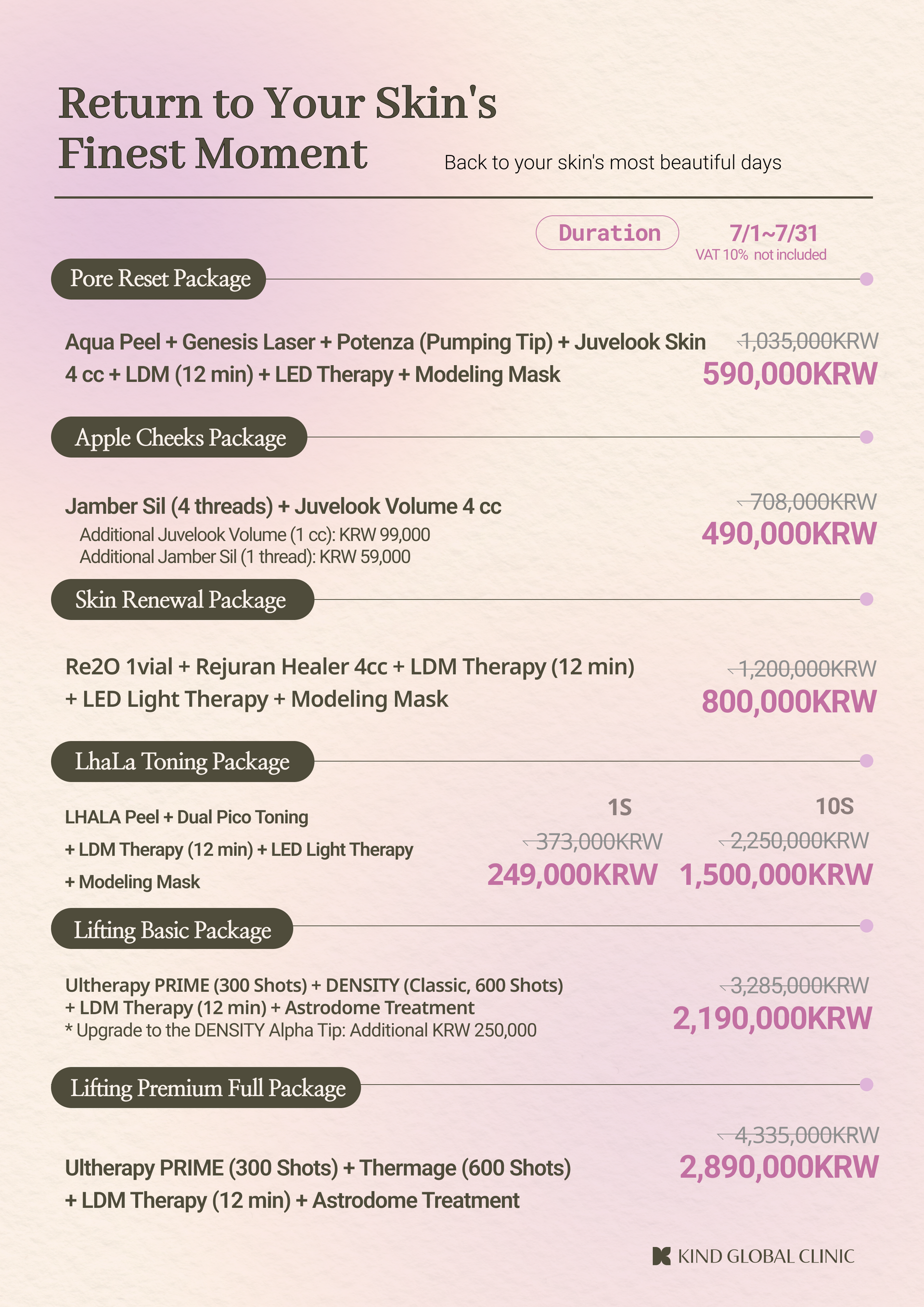
Why Package Deals Are Not Always Ideal
A package may look attractive because it simplifies pricing.
However, treatment should not be selected solely because several procedures are bundled together.
Before purchasing a package, ask:
- What concern does each treatment address?
- Is every treatment necessary?
- What is the expected downtime?
- Can treatments be performed safely together?
- What happens if one treatment is unsuitable?
The goal should be appropriate care rather than maximizing the number of procedures.
Boutique Clinics vs High-Volume Clinics in Seoul
Seoul has clinics ranging from smaller personalized practices to large, high-volume aesthetic centers.
A boutique-style clinic may emphasize:
- Longer consultations
- Personalized treatment planning
- Fewer patients at a time
- Continuity of care
High-volume clinics may provide:
- Broad treatment menus
- Multiple technologies
- Convenient scheduling
- Competitive pricing
Neither model is automatically superior.
What matters most is clinical quality, appropriate treatment selection, qualified medical professionals, safety, and aftercare.
Why Myeongdong Is Popular With Beauty Travelers
Myeongdong is well known among international visitors for shopping, skincare, cosmetics, restaurants, and tourism.
Its central location also makes it convenient for visitors staying in central Seoul.
For medical tourists, this can make combining dermatology appointments with sightseeing relatively convenient.
However, convenience should never replace careful clinic selection.
Why Seoul Has Become a Cosmetic Dermatology Hub
Several factors have contributed to Seoul's international reputation.
These include:
- Strong cosmetic medicine demand
- Advanced aesthetic technology
- Large specialist market
- High patient interest in skincare
- Competitive treatment options
- Medical tourism infrastructure
- Strong beauty and skincare culture
International visitors may therefore encounter a wide range of aesthetic services during a single trip.
Korean Beauty Standards and Treatment Planning
Beauty standards can influence what patients request.
Some patients may prioritize:
- Natural facial contours
- Clear-looking skin
- Small-looking pores
- Even complexion
- Subtle definition
- Youthful but natural appearance
These preferences can influence how treatments are discussed.
However, beauty standards differ between individuals and cultures.
Why Korean Clinics May Avoid Overfilled Faces
The highly filled, exaggerated look is not the only aesthetic approach used in Korea.
Many patients prefer subtle enhancement.
Dermatologists may therefore use conservative amounts of filler when filler is appropriate.
The objective can be to restore or balance volume rather than create dramatic fullness.
Why Less Treatment Can Produce Better Results
More treatment does not necessarily mean better treatment.
Excessive procedures may increase:
- Swelling
- Bruising
- Irritation
- Recovery time
- Cost
- Risk of an unnatural appearance
A well-designed plan may involve fewer procedures performed at appropriate intervals.
The Importance of Treatment Spacing
Some procedures need time before another treatment is considered.
Spacing treatments can allow:
- Swelling to resolve
- Skin to recover
- Results to become visible
- The dermatologist to reassess the response
This is particularly important when planning multiple procedures.
Common Korean Skin Treatments
Some commonly discussed treatments include:
TreatmentCommon Treatment GoalPico LaserSelected pigmentation and tone concernsRF MicroneedlingTexture, acne scars, selected laxitySkin BoostersHydration and skin qualityBotoxSelected dynamic wrinklesFillersVolume and contour concernsRadiofrequencySelected firmness concernsUltrasound-based treatmentSelected skin laxityMedical skincareAcne, pigmentation, texture, aging
Actual indications and suitability vary by patient.
Korean Dermatology Is Not One-Size-Fits-All
It is important not to assume that every Korean clinic follows the same philosophy.
Some clinics focus heavily on injectables.
Others specialize in lasers.
Some emphasize acne and medical dermatology.
Others focus on anti-aging.
Researching the individual dermatologist and clinic remains important.
How International Patients Can Choose Wisely
If you are considering cosmetic dermatology in Korea, look beyond promotional images.
Consider:
- Doctor qualifications
- Consultation quality
- Treatment explanations
- Safety information
- Downtime
- Aftercare
- Communication support
- Follow-up arrangements
International patients should also understand exactly what is included in the quoted price.
Questions to Ask Before Treatment
Before proceeding, ask:
- What is the main problem being treated?
- Why is this procedure appropriate?
- Are there alternatives?
- How many sessions might be needed?
- What side effects are possible?
- How long is recovery?
- Can I fly afterward?
- What aftercare is required?
These questions can help prevent unrealistic expectations.
What International Patients Should Know About Recovery
Different procedures have different recovery profiles.
Some may involve minimal visible downtime.
Others can cause:
- Redness
- Swelling
- Bruising
- Peeling
- Temporary sensitivity
If you are visiting Seoul for only a few days, treatment selection should account for your departure date.
Why Medical Consultation Matters
A consultation should not simply confirm the treatment you found online.
A dermatologist should assess your skin and explain whether the treatment is appropriate.
This is particularly important when you are considering combination therapy.
Korean vs Western Aesthetic Medicine: A Practical Comparison
FactorKorean Cosmetic DermatologyWestern Aesthetic MedicineSkin qualityOften strongly emphasizedAlso widely emphasizedPreventive careCommonly promotedIncreasingly popularTechnologyBroad access to aesthetic devicesBroad access varies by countryCombination treatmentsFrequently offeredAlso widely availableNatural appearanceCommon patient preferenceAlso a major preferenceMedical tourismStrong infrastructure in SeoulVaries by destinationTreatment philosophyVaries by clinicVaries considerably
This table should not be interpreted as saying that one region provides universally better care.
Is Korean Dermatology Better Than Western Aesthetic Medicine?
There is no simple answer.
The quality of care depends on the individual dermatologist, clinic, technology, treatment plan, and patient.
A highly qualified dermatologist in another country may provide excellent care, while a Korean clinic may not necessarily be the right choice for every patient.
Korea's strength is its extensive cosmetic dermatology ecosystem and concentration of aesthetic services, particularly in Seoul.
When Korea May Be Attractive to International Patients
Korea may be particularly appealing if you want access to:
- Multiple aesthetic technologies
- Skin-focused treatment programs
- Korean skincare expertise
- Preventive treatment approaches
- A broad cosmetic dermatology market
International patients should still evaluate clinics individually.
Conclusion
Korean dermatology can feel different from aesthetic medicine in other countries because of its strong emphasis on skin quality, preventive care, technology, customized treatment planning, and natural-looking results.
However, there is no single “Korean method,” just as there is no single Western aesthetic medicine philosophy. Excellent dermatologists around the world can use similar technologies while applying different treatment strategies based on patient needs.
In Seoul, patients can find an unusually broad range of cosmetic dermatology options, from laser and RF treatments to skin boosters, medical skincare, Botox, and fillers. The challenge is not finding a treatment—it is determining which treatment is actually appropriate.
For international patients, the best approach is to prioritize qualified medical care, realistic expectations, individualized planning, safety, and long-term skin health rather than simply choosing the most popular procedure.
FAQs
Why is Korean dermatology considered different from Western aesthetic medicine?
Korean cosmetic dermatology is often associated with a strong focus on skin quality, preventive maintenance, technology, combination treatment, and natural-looking results. However, practices vary between individual clinics and countries.
Is Korean dermatology better than Western aesthetic medicine?
Not necessarily. Quality depends on the individual dermatologist, clinic, treatment plan, technology, safety standards, and patient needs.
Why are combination treatments popular in Korea?
Different treatments address different concerns. A dermatologist may combine procedures when each treatment has a specific purpose and can be performed safely together.
Why do Korean dermatologists focus on skin quality?
Skin quality—including hydration, pigmentation, texture, elasticity, and firmness—can influence overall facial appearance and perceived age.
Are Korean clinics suitable for international patients?
Many clinics in Seoul serve international patients, but patients should evaluate communication, medical qualifications, treatment planning, aftercare, and recovery requirements before choosing a clinic.
Why does Seoul have so many cosmetic dermatology clinics?
Seoul has a large aesthetic medicine market supported by strong domestic demand, medical tourism, skincare culture, and extensive availability of cosmetic technologies.
Do Korean clinics avoid fillers?
No. Fillers are widely available, but many patients prefer subtle enhancement rather than an obviously overfilled appearance.
Can fewer cosmetic treatments produce better results?
Yes. When treatments are carefully selected and appropriately timed, fewer procedures may provide balanced results while reducing unnecessary cost, downtime, and potential complications.